Sorting by

×

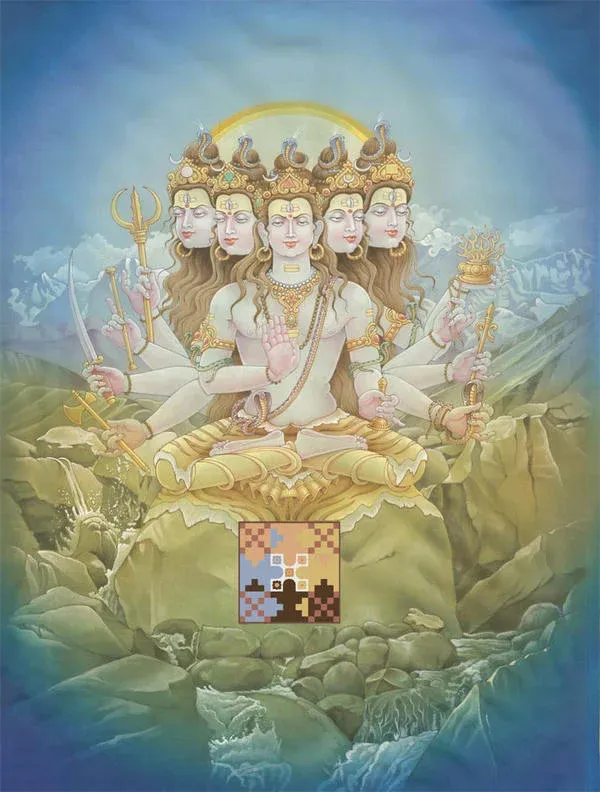
Enlightenment, Hindu Perspective

Enlightenment in the Hindu perspective is a profound and multifaceted concept, deeply rooted in the spiritual and philosophical traditions of the Indian subcontinent. It is often described as “moksha,” which signifies liberation from the cycle of birth, death, and rebirth (samsara) and the realization of one’s true self or consciousness (Atman) as being identical to the ultimate reality (Brahman).

The path to enlightenment in Hinduism, unlike in some other traditions, is not linear but can be approached through various means depending on an individual’s temperament and stage of life. The Bhagavad Gita, a seminal text in Hindu philosophy, outlines several paths to enlightenment: the path of knowledge (Jnana Yoga), the path of devotion (Bhakti Yoga), the path of selfless action (Karma Yoga), and the path of meditation (Raja Yoga). Each of these paths is designed to suit different personalities and life circumstances, recognizing that enlightenment is accessible to all.

Jnana Yoga focuses on the study of sacred texts and the pursuit of wisdom through introspection and reflection. It emphasizes the importance of discerning between the real (Brahman) and the unreal (Maya, or the illusionary world). Through deep meditation and inquiry, an individual seeks to transcend ignorance and realize their unity with the divine.

Bhakti Yoga, on the other hand, is the path of devotion and love for a personal god. It involves practices such as chanting, prayer, and rituals, fostering a deep emotional connection and surrender to a higher power. Through this devotion, practitioners aim to dissolve their ego and merge with the divine consciousness.

Karma Yoga is the path of selfless action, where individuals engage in their duties without attachment to the results. By dedicating the fruits of their labor to the divine, they purify their minds and transcend the ego, slowly progressing towards liberation.

Raja Yoga, often associated with the Yoga Sutras of Patanjali, emphasizes meditation and mental discipline. It involves ethical practices, physical postures, breath control, and deep meditation to calm the mind and awaken spiritual insight. This path highlights the importance of controlling the mind to achieve inner peace and self-realization.

Enlightenment in Hinduism is not merely an academic or intellectual pursuit. It is an experiential awakening, a transformative inner realization that transcends ordinary human perception. It is about dissolving the illusion of separateness and recognizing one’s eternal connection with all of existence. Hindu scriptures, particularly the Upanishads, often describe the experience of enlightenment as an indescribable, blissful state in which one perceives the unity of all things.

In essence, Hindu enlightenment is about realizing one’s true nature and potential beyond the physical and mental confines. It is an ongoing journey of self-discovery and spiritual growth, one that is deeply personal and universally accessible. This perspective encourages individuals to seek inner truth and harmony, cultivating wisdom, compassion, and contentment as they progress towards liberation.

Red Pill, Blue Pill

The “red pill” and “blue pill” metaphor from The Matrix has become a cultural touchstone, symbolizing the choice between transformative truth and comfortable illusion. In the film, the protagonist, Neo, is offered a choice by Morpheus: take the blue pill, and remain in the artificial, simulated reality of the Matrix, unaware of its true nature; or take the red pill, and awaken to reality, with all its hardships and truths.

This concept parallels an individual’s spiritual journey, where the decision to “wake up” is both transformative and disorienting. The red pill represents the quest for enlightenment and truth, a journey marked by self-discovery and the shedding of illusions. On a spiritual path, this choice is akin to seeking deeper understanding of oneself and the universe, often involving profound personal transformation. It’s about questioning the nature of reality and pushing beyond the boundaries of conditioned perceptions. This can lead to a more authentic, albeit challenging, existence.

In contrast, the blue pill signifies the choice to remain in the known, where comfort and stability take precedence over truth and growth. This path reflects many spiritual teachings’ caution against attachment and aversion. While the blue pill offers the allure of security within established beliefs and routines, it limits potential for growth and understanding.

Choosing the “red pill” in a spiritual context may involve embracing new perspectives, challenging existing beliefs, and facing uncomfortable truths. Like Neo’s journey, it involves courage, as one might encounter obstacles and existential questions about identity, purpose, and connection to the collective consciousness. To those on a spiritual path, taking the red pill symbolizes the willingness to confront fears and embrace change as an integral part of personal evolution and spiritual awakening.

The choice between the red and blue pills ultimately reflects a fundamental decision in spirituality: to live in awareness and seek truth, despite uncertainty and difficulty, or to remain in the comfort of the familiar, often at the cost of deeper understanding and fulfillment. Thus, the metaphor offers rich ground for interpreting the spiritual journey’s dynamics, challenges, and rewards.

The Rabbit Hole

The metaphorical rabbit hole of spirituality and the search for truth is a captivating journey that has intrigued seekers for centuries. This concept conjures the image of Alice in Wonderland, where stepping into the rabbit hole symbolizes venturing into the unknown, a realm where conventional norms are upended, and reality stretches beyond the ordinary. In spirituality, this rabbit hole represents the quest for deeper understanding and the transcendence of ordinary perceptions to uncover profound truths about existence, self, and the universe.

Embarking on this journey often begins with a subtle unease or a profound question about life’s purpose. Individuals may start to question the materialist or superficial narratives that dominate society. This curiosity propels them to explore various spiritual paths, philosophies, and disciplines. Whether delving into ancient texts, meditation, mindfulness, or engaging with spiritual teachers, each step down the rabbit hole involves peeling back layers of illusion to reveal deeper truths.

As seekers plunge further, they often encounter paradoxes and mysteries inherent in spiritual teachings. Concepts such as the eternal nature of the soul, the interconnectedness of all life, and the illusion of time challenge the rational mind. This process can be disorienting, as it demands a re-evaluation of previously held beliefs and assumptions. The rabbit hole, in this sense, symbolizes the dissolution of the ego and a confrontation with the vast, often unfathomable nature of reality.

This journey also highlights the diversity of spiritual experiences. No two explorations down the rabbit hole are alike, as each individual brings their own perspective and background to the quest. For some, the path may be one of solace and inner peace, finding comfort in the practice of meditation and connection with nature. For others, it might include ecstatic experiences or a profound sense of unity with the cosmos. Regardless of the path, the underlying theme is the transformation that occurs as individuals embrace the complexity and wonder of their spiritual discoveries.

Ultimately, the metaphorical rabbit hole is not a destination but an ongoing journey. It invites constant inquiry and reflection, an acceptance of the unknown, and an openness to continual transformation. By embracing this path, seekers cultivate wisdom, compassion, and a deeper connection to themselves and the world around them. Thus, the rabbit hole of spirituality and the search for truth becomes a timeless exploration of the mysteries that define the human experience.